Report on Summer School 2026 at Brookhaven
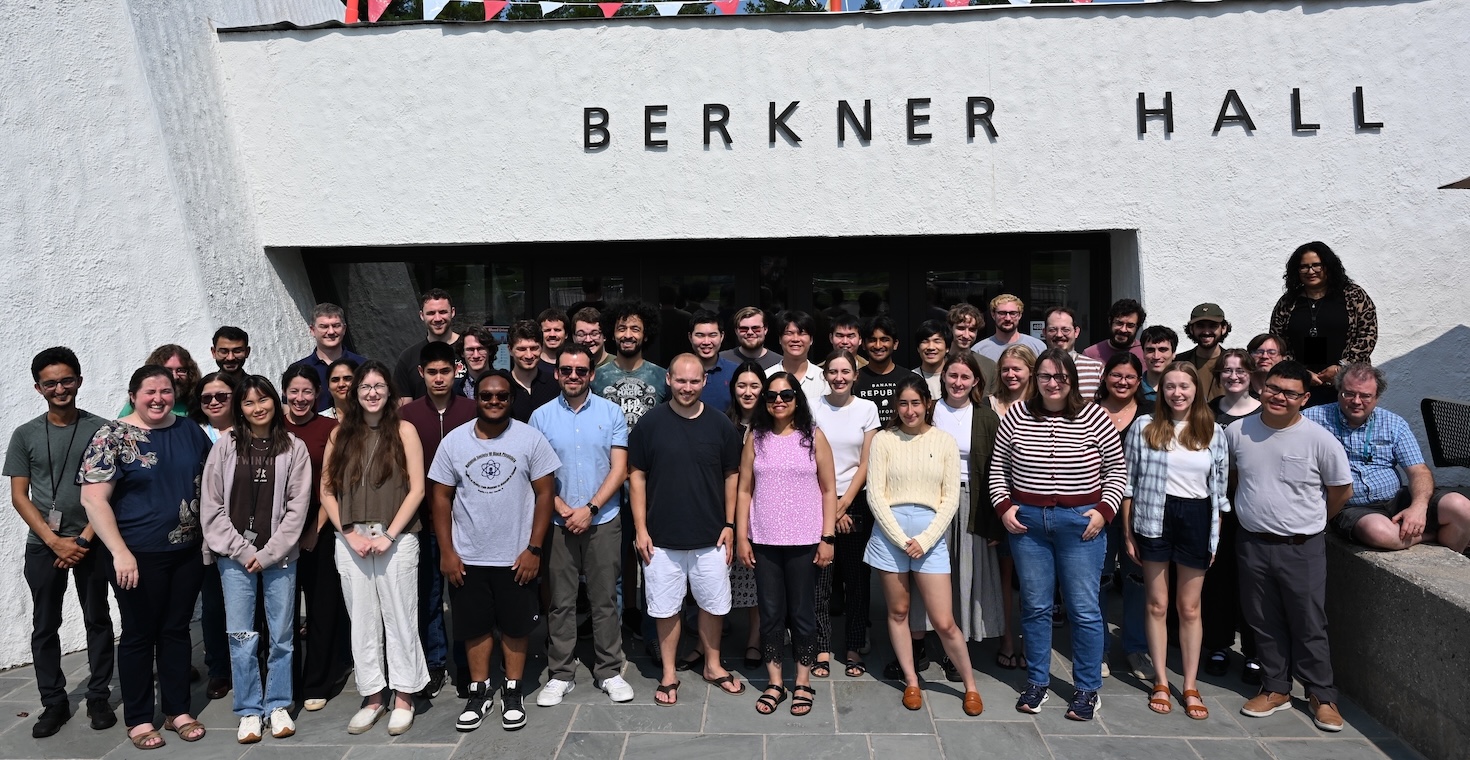
Computational HEP 2026 summer school participants and instructors outside of Berkner Hall at Brookhaven National Laboratory. Photo credit: Henry Schreiner, Princeton University.
The Department of Energy Computational High-Energy Physics training programs combined again for the 2026 summer school, hosted by Brookhaven National Laboratory in New York. The sessions held August 10-14 introduced hands-on development exercises, high-performance computing lectures, open-source software community introductions, and career panel discussions.
This training event was supported by three of the four Department of Energy programs TAC-HEP, WATCHEP, and C2-THE-P2. The school was hosted by the BNL Physics Department, and it featured lecturers from BNL, Princeton, University of Massachusetts-Amherst, and Davidson College.
The trainees learned about better coding in Python and C++, and they followed hands-on exercises in debugging and CI/CD. They also experimented with containerization using Apptainer, and they attended introductory lectures on the mathematical foundations of deep learning. One highlight was the exposure to the OpenCode instance at BNL running powerful open-source models for code development and testing.
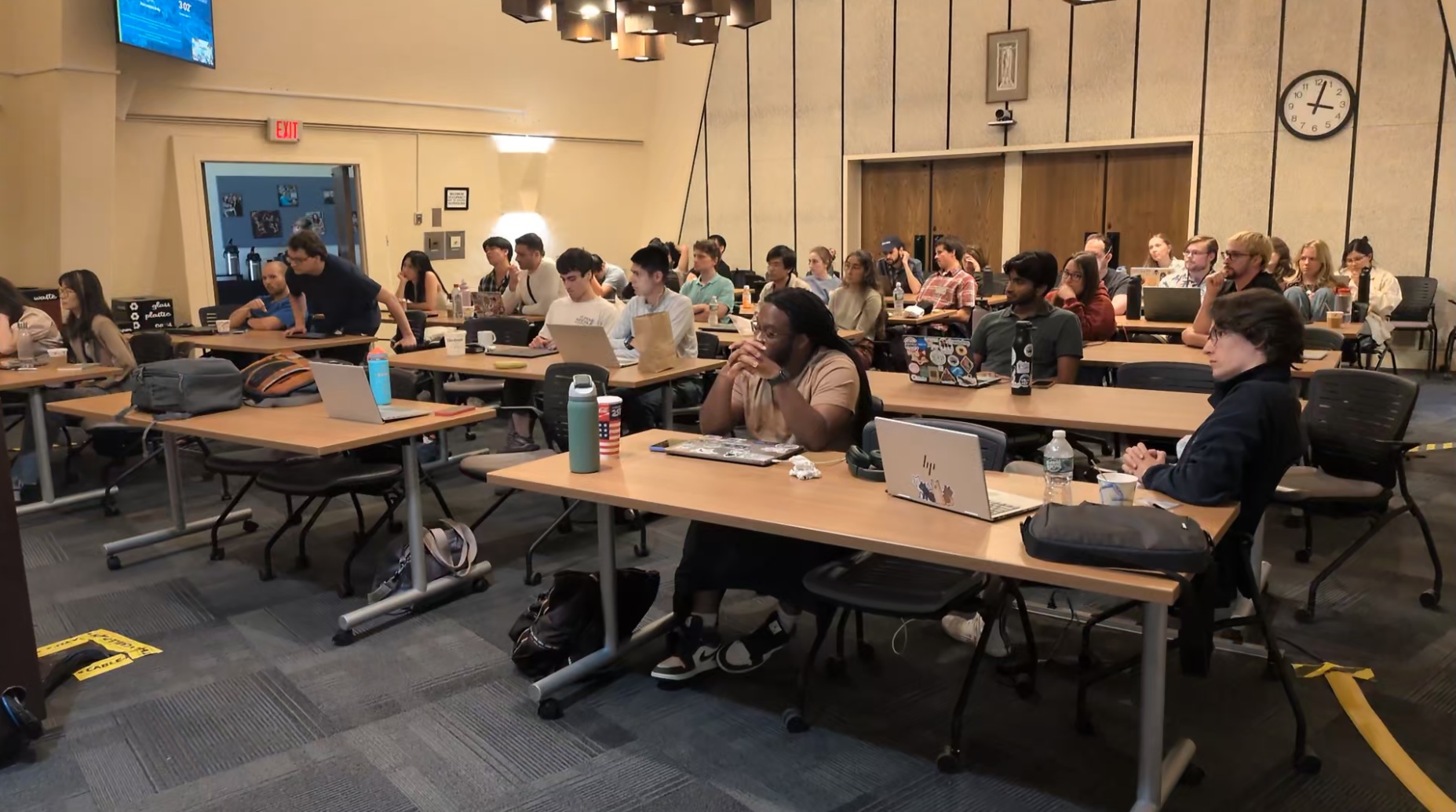
Summer school participants in hands-on learning session at Brookhaven National Laboratory. Photo credit: Henry Schreiner, Princeton University.
A career panel composed of university faculty, research software engineers, DOE group leaders, and DOE laboratory researchers introduced students to the breadth of opportunities for computational high-energy physicists in academia and the DOE.
The summer school program concluded with special tours of the Scientific Computing and Data Center facility at BNL and a walking tour of the laboratory.
The summer school was very successful in helping to build community within the cohorts. Student trainees had a chance to exchange news about their research projects and their experience in high-energy physics. They enjoyed a vibrant social program in the communities surrounding BNL.
The detailed agenda and timetable for the summer school are online.